
Construction Cost Outlook for India: Key Risks for the Second Half of 2026
At the beginning of 2026, construction costs in India were expected to follow a relatively moderate path, supported by stable prices for several domestically produced materials. However, escalation of conflict in West Asia changed that outlook, creating uncertainty across global commodity, energy and logistics markets. Sharp movements in oil, gas and base-metal prices led to widely varying forecasts for Indian construction costs. Some anticipated severe increases across the sector.
Several months on, the emerging picture provides a clearer basis for understanding where cost pressures are being felt and what developers should monitor during the remainder of 2026.
The global cost environment remains volatile
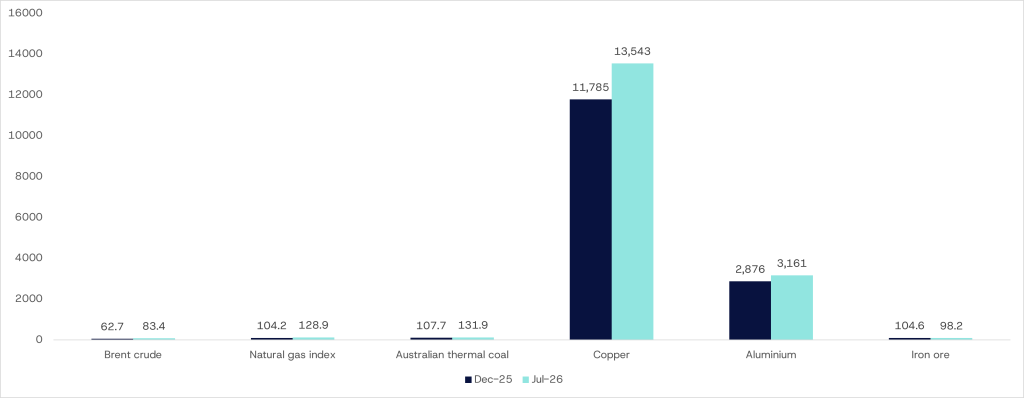
The movement in commodity prices since December 2025 shows why the cost impact has varied across construction packages. Energy prices have recorded the greatest increases, while copper and aluminium remain materially above their pre-conflict levels. Iron ore has moved in the opposite direction, although this does not necessarily translate into a corresponding reduction in Indian reinforcement steel prices.
| Cost driver | Unit | December 2025 | July 2026 | Movement | Main construction exposure |
| Brent crude | USD/barrel | 62.7 | 83.4 | +33.0% | Manufacturing, transport and logistics |
| Natural gas index | 2010=100 | 104.2 | 128.9 | +23.7% | Energy-intensive manufacturing and fuel costs |
| Australian thermal coal | USD/tonne | 107.7 | 131.9 | +22.5% | Cement, steel and other manufacturing |
| Copper | USD/tonne | 11,785 | 13,543 | +14.9% | Cables, busducts, transformers and MEP equipment |
| Aluminium | USD/tonne | 2,876 | 3,161 | +9.9% | Façades, electrical systems and finishes |
| Iron ore | USD/dry metric tonne | 104.6 | 98.2 | −6.1% | Steel production |
Source: World Bank Commodity Price Data, January and August 2026 Pink Sheets. Figures are monthly global benchmark averages in nominal US dollars.
These movements do not pass directly into project costs at the same percentage. Raw materials represent only part of the price of a finished construction product or installed package. Manufacturing, labour, transportation, currency, supplier margins and market demand also influence the final amount paid by the project.
The data does, however, indicate where cost pressure is most likely to appear. Electrical and MEP packages remain exposed to elevated copper prices. Façade and electrical packages continue to carry aluminium exposure. Higher energy prices affect a wider range of domestically manufactured materials through fuel, power and transportation costs.
Additionally, the Indian government has limited the immediate pass-through of global oil prices into domestic retail fuel prices. This has moderated the effect on construction costs so far. Continued exposure will depend on the duration of elevated crude and gas prices.
Copper remains the most volatile material exposure
Copper continues to be the most volatile construction material monitored by Ascentis. Its movement has direct implications for:
- Electrical cables
- Busbars and busducts
- Transformers and switchgear
- HVAC equipment
- Building management systems
- Façade systems
- Specialist electrical equipment
Suppliers may shorten quotation validity or include price-adjustment conditions during periods of volatility. The effect on each package will depend on its copper content, procurement timing and commercial terms.
Cement and steel require local market assessment
Cement and reinforcement steel account for a significant proportion of most building costs. India has substantial domestic production capacity for both materials, which provides some protection from international supply-chain disruption.
However, domestic prices can still be affected by:
- Energy and transportation costs
- Regional supply and demand
- Production capacity and shutdowns
- Infrastructure and real-estate activity
- Seasonal procurement patterns
- Local market concentration
Ascentis has observed significant regional movement in steel prices during 2026. This reinforces the need to use current local quotations when updating project budgets. National escalation assumptions may not reflect conditions in a specific project market.
Cement pricing should also be monitored by region. Coal, other fuel inputs and transportation costs may place further pressure on production and delivery costs if energy prices remain elevated.
Labour costs are likely to increase
Labour rates usually respond to energy and commodity movements with a time lag. Higher oil and LPG prices increase transport, production and household costs, which then flow through to food, accommodation, consumer goods and the general cost of living.
Contractors may respond through higher wages, labour allowances, transport costs and preliminaries. The impact will vary by location and trade, with greater pressure likely in labour-intensive packages and markets with limited skilled-worker availability. Developers should therefore test budgets against current local labour rates and allow for increases that may emerge later in the year.
The effect varies considerably by package
The following ratings provide an indicative view of current exposure. The risk level for an individual project will depend on its design, specification, location, procurement status and reliance on imported products.
| Tender package | Current risk level | Principal exposure |
| Civil and structural works | Moderate | Steel, cement, diesel and transportation |
| Façade | Moderate to high | Aluminium, glass, specialist systems and imports |
| Electrical systems | High | Copper, aluminium and imported components |
| HVAC and other MEP systems | Moderate to high | Copper, equipment, energy and currency |
| ELV and building controls | Moderate to high | Electronics, imported components, currency and supply-chain lead times |
| Interior works | Moderate | Labour, finishes, adhesives and logistics |
| FF&E | Moderate to high | Imports, currency, freight and supplier lead times |
| Kitchen and laundry equipment | Moderate to high | Stainless steel, imported equipment and currency |
Tender returns provide the clearest project-level evidence
Commodity movements take time to pass through to construction costs. Contractors may have existing material inventory, previously agreed supplier rates or advance purchase arrangements. Other bidders may price against current replacement costs or include allowances for further volatility.
Tender returns therefore provide the clearest evidence of how commodity movements are affecting actual project budgets. During periods of volatility, contractors and suppliers may respond through:
- Shorter tender-validity periods
- Additional escalation allowances
- Qualifications covering copper and aluminium
- Currency fluctuation clauses
- Higher advance-payment requirements
- Extended delivery periods
- Exclusions for freight and insurance increases
- Greater use of provisional rates
A higher tender price may include both current cost movement and an allowance for future uncertainty.
Owners should examine the commercial basis of each bid, identify the assumptions used and determine where future price risk has been allocated.
Our recommendations to developers and investors
- Update cost plans at package level
Review copper, aluminium, energy-intensive materials and imported components separately. A single escalation percentage applied across the full project budget can conceal where the real exposure lies.
- Record the basis of volatile material prices
Cost plans and tender comparisons should state the base prices used for copper, aluminium, steel and other high-risk materials. This creates a clear reference point for future adjustments.
- Consider defined price-adjustment mechanisms
For packages with substantial commodity exposure, a transparent base-price adjustment mechanism may provide better value than asking contractors to price an uncertain risk for the full contract period.
- Review and separate contingency
Contingency is usually set during cost planning, but current volatility requires periodic review and adjustment as exposure changes. A separate war-risk contingency can help owners track this exceptional exposure alongside the project’s general design and construction contingency.
- Prioritise high-risk procurement packages
Electrical systems, façades, major MEP equipment, controls and imported FF&E require early design decisions and active procurement planning.
- Review local alternatives
Suitable domestic products can reduce exposure to freight, currency and international supply disruption. Alternatives should be assessed against technical performance, durability, operator requirements, maintenance support and whole-life cost.
- Maintain current market testing
Project budgets should be tested against recent supplier quotations and tender returns. Historical benchmark rates require adjustment for current market and project-specific conditions.
Outlook
Construction cost pressure in India is likely to remain elevated through the second half of 2026. Current data points to concentrated exposure in energy, copper, aluminium and packages containing imported or specialist components.
This requires targeted cost management. Applying a uniform escalation percentage across the project budget may overstate the effect on some packages while leaving others inadequately protected.
Projects with completed designs, clear procurement schedules and early commitments will have greater cost visibility. Projects at feasibility or early design stage should retain appropriate allowances until key specifications, procurement routes and risk-allocation mechanisms are established.
Developers should continue monitoring commodity prices, domestic fuel policy, currency movement, shipping conditions and contractor behaviour. Ascentis will assess these factors against live tenders and project data as the market develops.