
The Complexities of High-Rise Construction
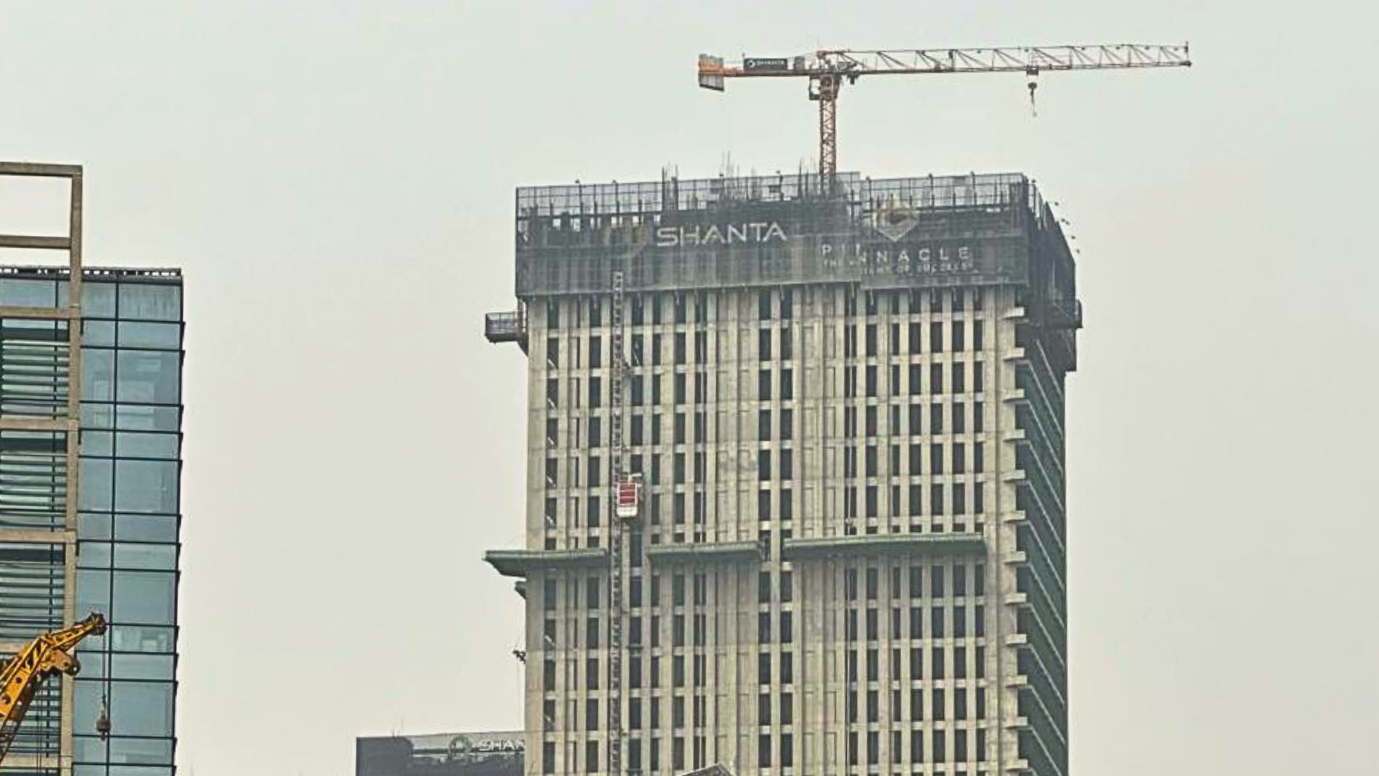
High-rise construction is one of the most complex forms of building. Poorly built towers can compromise safety, functionality, and long-term value. And because they dominate city skylines, mistakes are highly visible and costly. Delivering them demands precision, planning, and the right expertise.
Our experience with high-rise construction
In Dhaka, we’ve been privileged to manage some of the city’s most ambitious towers with Shanta Holdings, one of Bangladesh’s leading real estate developers known for delivering premium residential and commercial projects and for shaping Dhaka’s modern skyline:
- Forum Tower (completed 2021): Dhaka’s first twin towers, rising 24 floors as premium commercial office buildings. Ascentis came on board in an advisory role for acceleration, implementation, and fit-out after the structure was completed.
- Pinnacle (due to open year-end): Dhaka’s first 40-storey tower, targeting Platinum LEED certification. Construction began in late 2020, following a delay in the start of works during the COVID-19 pandemic. Pinnacle demonstrates first-in-Bangladesh construction methodologies such as aluminium formwork, reinforcement couplers, self-climbing platforms, and advanced safety measures.
- Dhaka Tower (under development): A landmark project with 40 floors above ground and six basement levels, featuring a distinctive inclined façade that makes it one of the most complex architectural designs in Dhaka. It is the first in Bangladesh to fully integrate BIM (3D–7D) across every discipline for design, cost, and lifecycle management. Dhaka Tower is also targeting Platinum LEED certification.
Challenges in skyscraper construction and our mitigation methodologies
Building tall in Dhaka brings unique challenges. Here’s how we’ve addressed them:
- Urban challenges: Towers sit on tight plots with minimal setbacks, surrounded by heavy traffic and pedestrian flows. Seasonal monsoon rains add further disruption. At Pinnacle, planning extended beyond site logistics to traffic management, scheduling deliveries during off-peak hours, and coordinating with local authorities. We also invested in tower cranes and high-capacity hoists to move material efficiently in crowded urban settings.
- Geotechnical & soil retention: Dhaka’s soft soil and high water table require careful management. At both Pinnacle & Dhaka Tower, a complex shore piling execution with internal bracing was installed to reinforce soil stability and retain soil effectively in a tight urban plot, with minimal vibration and disruption to the neighbouring buildings. Continuous dewatering was carried out in parallel to prevent basement flooding. We combined pumping systems with settlement monitoring to ensure that nearby roads and buildings were not compromised during the works.
- Health & safety: Worker safety is critical, especially in a city with limited high-rise construction experience. At Pinnacle, we implemented self-climbing platforms around the exterior. These systems reduced fall risks, shielded crews from weather, and created safer working conditions. We also conducted high-altitude safety training for local workers and enforced daily safety briefings to build a culture of awareness on site.
- Superstructure: Due to ambitious timelines, we implemented aluminium system formwork for the first time in Bangladesh with Pinnacle. This cut slab casting cycles to 12 days (compared to the 30-day standard in Bangladesh). Self-compacting concrete sped up pouring and reduced vibration risks. Reinforcement couplers, instead of traditional lapping, saved on steel usage and improved structural precision. These combined methods accelerated the programme while keeping quality consistent on every floor.
- Façade & MEP: For towers at this height, façade design cannot be an afterthought. Wind tunnel testing validated the performance of high-performance façades. We also ensured that BMU (building maintenance unit) access was integrated early in the design so that the façade can be safely maintained over its lifecycle. On MEP, we implemented pressure zoning and riser strategies to handle water supply, firefighting systems, and air circulation effectively at height, while also ensuring redundancy for critical systems.
- Sustainability: Both Pinnacle and Dhaka Tower are designed to meet LEED standards, embedding energy efficiency and long-term asset value from the outset. We worked closely with consultants to integrate features such as efficient glazing, optimised HVAC systems, and waste management strategies. At Dhaka Tower, LEED Platinum ambitions have shaped decisions from the core and shell through to façade and services, ensuring performance is locked in from day one.
The Role of BIM in high-rise construction
BIM is increasingly vital for tall, complex projects because it improves coordination, reduces clashes, and gives clients greater cost awareness and schedule confidence. Dhaka Tower is Bangladesh’s first project to use BIM fully, from 3D through to 7D.
Applications include design coordination across façade, structure, finishes, lighting, and MEP; itemised material quantification for procurement and logistics; tender documentation; BMU access and storage planning; and clash detection. BIM also supports 4D scheduling and 5D cost control, with 6D and 7D data for sustainability and lifecycle management. In practice, this means fewer surprises during construction, better accuracy in budgets, and a stronger foundation for long-term building operations.
In conclusion
Forum proved our delivery discipline. Pinnacle showcases groundbreaking methodologies, workplace safety, sustainable practices, and senior-led management. Dhaka Tower represents the next landmark in Dhaka’s skyline and a new benchmark for digital, sustainable delivery.
But the success of these towers isn’t just about engineering and tools. It also depends on choosing the right partner, one willing to collaborate, share knowledge, and work side by side with clients, operators, and consultants. At Ascentis, this approach defines our work, and it’s how we ensure every tower we manage performs for decades to come.