About
Ascentis is committed to leveraging digital construction technologies, particularly BIM, to transform how we deliver high- performance projects across all sectors. Our expertise in BIM goes beyond the basics of 3D design to provide a fully integrated, data-driven approach to every phase of project development.
What is BIM?
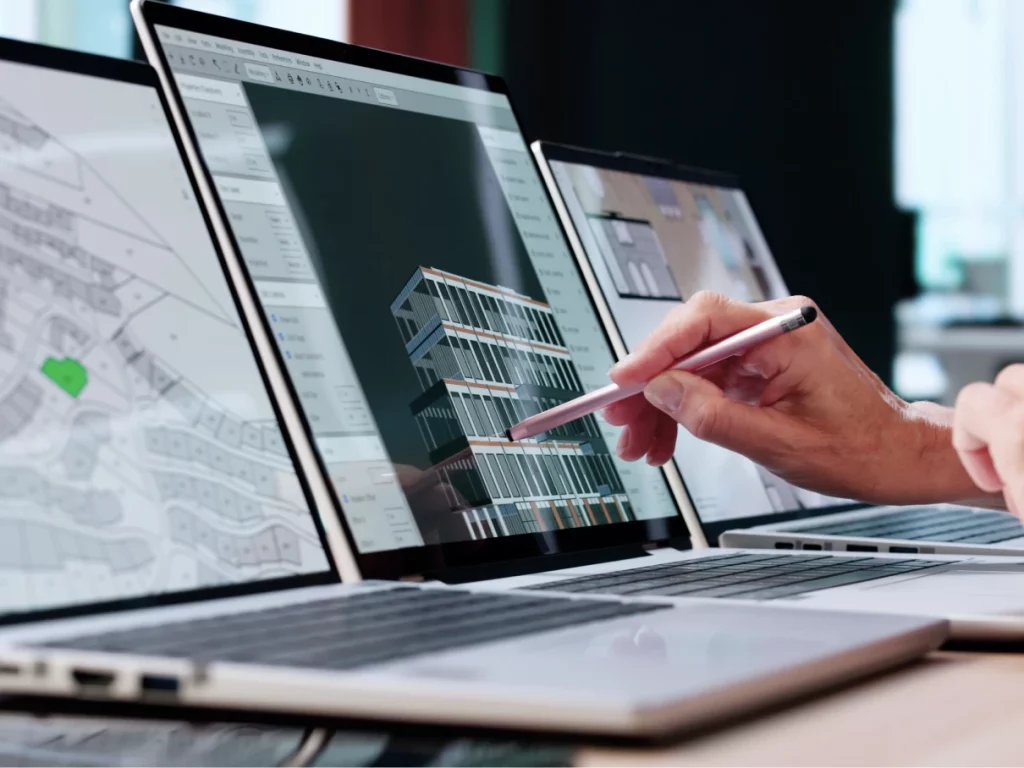
Building Information Modelling (BIM) is a process that creates a detailed, digital representation of a building, also known as a Digital Twin. This information-rich model allows all project stakeholders, particularly architects, structural engineers, MEP engineers and kitchen consultants, to collaborate efficiently, ensuring that every aspect of design, engineering, and construction is coordinated seamlessly.
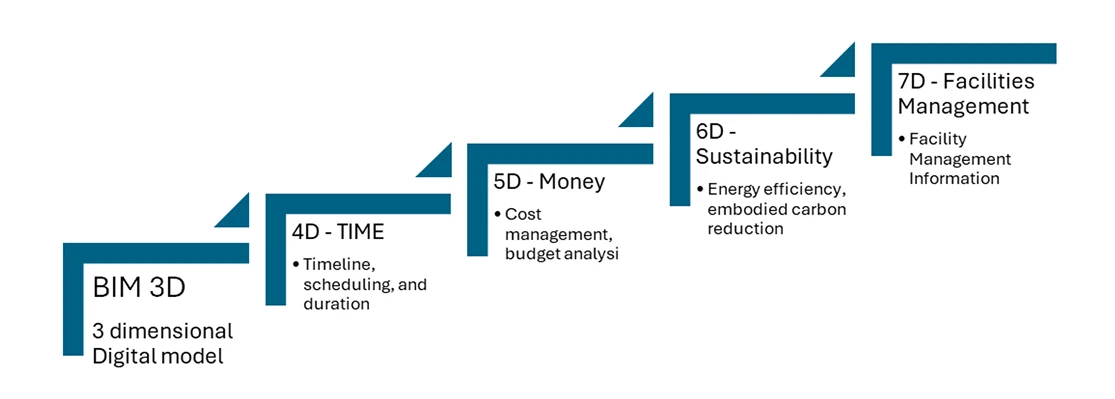
At Ascentis, we take a dynamic approach to BIM. From its initial 3D form to more advanced levels, our experience with successfully applying BIM across multiple dimensions means are clients are supported across the entire lifecycle of their construction project.
Our Digital Construction Services
At Ascentis, we provide end-to-end digital construction services that enhance precision, coordination, and efficiency across every stage of your project. Our key offerings include:
- 3D Engineering Design
We develop accurate, coordinated 3D models for MEP, structural, and architectural systems. These models support design visualization, clash detection, and early resolution of spatial conflicts.
- BIM Management During Design Stage
Our team ensures that all consultants and disciplines are aligned within a unified BIM environment. This results in seamless integration of architecture, engineering, and operations from the start.
- BIM Management During Procurement Stage
We use BIM to generate precise quantity take-offs, track procurement packages, and link model data with specifications to improve purchasing accuracy and supplier coordination.
- BIM Management During Construction Stage
We oversee construction workflows using federated BIM models for sequencing (4D) and cost tracking (5D), ensuring greater site efficiency, reduced rework, and tighter budget control.
Our BIM experts work closely with project teams to ensure that the model becomes a central, live resource for decision-making, saving you time and money.
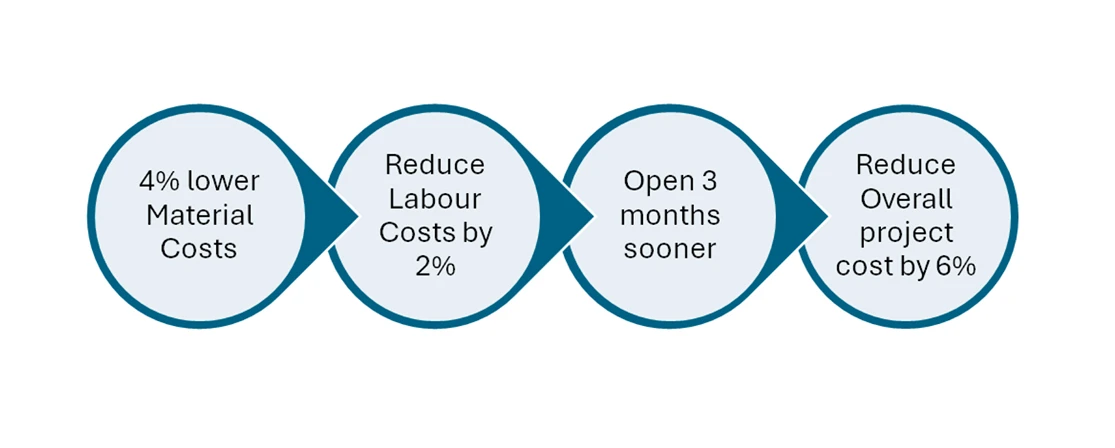
Expected Savings with BIM
Despite its early initial investment, customers who have used BIM in their projects have seen tangible savings along with a faster time-to-market.